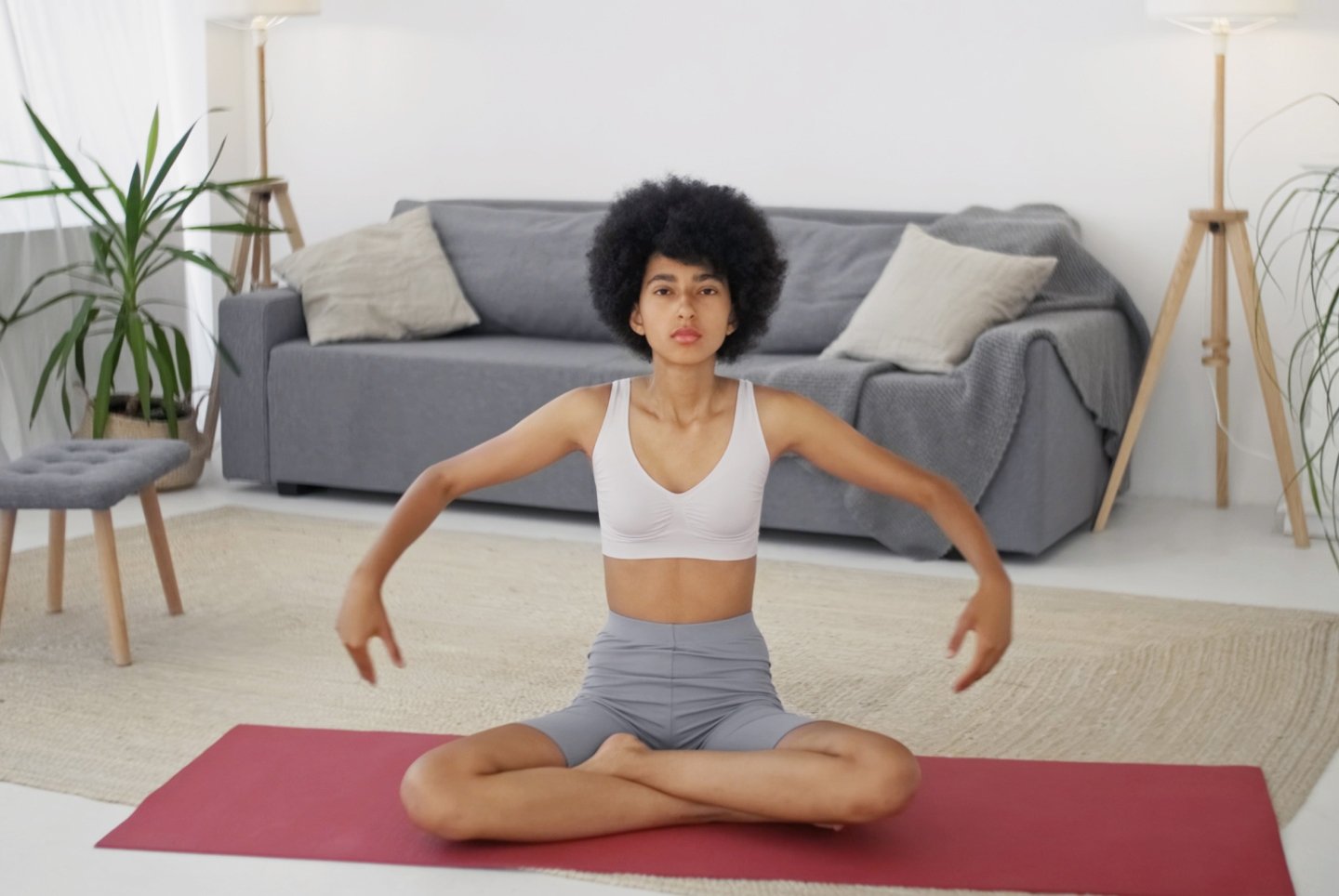
Sunday Morning Flow
Day 7: Reflect, Reset, and Carry the Practice Forward — 7-Day Morning Flow Challenge
You made it to Day 7.
Maybe you followed the morning flow every day. Maybe you missed a day, joined halfway through, or only managed the shorter version on busy mornings. Maybe some days felt calm and easy, while others felt rushed, distracted, or completely ordinary.
Today isn't about deciding whether you “completed” the challenge correctly.
It's about noticing.
What did the last seven days actually feel like in your body?
Did you notice anything different around stress, cravings, eating, or the way you moved through your mornings? Did you become slightly more aware of what you needed before automatically reaching for your phone, coffee, food, or something else?
And if you didn't notice much at all, that's okay too.
A mindfulness practice doesn't need to produce a dramatic result every time to be useful. Sometimes the most important change is simply becoming aware of something that was already happening.
Day 7 is a gentle close to the week — and an invitation to take whatever was useful with you beyond these seven days.
You Don't Need a Perfect Seven Days
There can be a strange pressure around finishing a challenge.
Once you reach the final day, it's tempting to look back and count everything you did wrong.
“I missed Wednesday.”
“I didn't do the full five minutes.”
“I checked my phone first.”
“I wasn't consistent enough.”
“I still had cravings.”
“I still stress-ate.”
But that's not what this challenge was designed to measure.
The point was never to prove that you can follow seven instructions perfectly.
The point was to create a little more space between what you feel and what you automatically do.
That's a very different goal.
If you showed up all seven days, well done. Not because you were perfect, but because you practiced returning to yourself consistently.
If you missed a day, nothing has been ruined.
If you only joined today, you're not behind.
There is no special version of mindfulness reserved for people who started on Day 1.
Monday is another clean place to begin.
So is Tuesday.
So is a stressful afternoon when you suddenly realize you've been running on autopilot.
The practice is always available.
Start Day 7 by Checking In With Your Body
Before you think about what you achieved this week, pause for a moment.
You don't need a journal.
You don't need music.
You don't need an app.
Just sit or stand somewhere comfortable and notice how your body feels right now.
Take a slow breath.
Then ask yourself:
What do I notice?
Maybe your shoulders feel tight.
Maybe your face feels relaxed.
Maybe you're tired.
Maybe you're hungry.
Maybe you're restless.
Maybe you feel completely normal.
There is no correct answer.
Spend another minute simply noticing.
Then bring your attention to your breathing. You don't have to change it dramatically. Let it be natural and comfortable.
Take a few slow breaths.
Relax your jaw if you notice tension there.
Drop your shoulders slightly.
Let your hands rest.
Then gently move your body — stretch your arms, roll your shoulders, turn your neck comfortably, or take a short walk around the room.
This is your final morning flow of the seven-day challenge.
But it doesn't need to look different because it's Day 7.
In fact, keeping it familiar is part of the point.
A Simple Day 7 Morning Flow
If you've been following the previous days, you already know what to do.
You don't need another complicated routine.
1. Arrive
Before opening social media, checking messages, or jumping into your to-do list, give yourself a moment to arrive.
Sit up.
Stand by a window.
Or simply stay where you are and take a few breaths.
Notice that you're here.
2. Breathe
Take five slow, comfortable breaths.
Don't force a deep breath if it feels uncomfortable.
The goal isn't to perform breathing perfectly.
It's simply to create a small pause.
3. Move
Spend one or two minutes moving gently.
Stretch.
Walk.
Roll your shoulders.
Shake out your hands.
Move in whatever way feels natural.
You're reminding yourself that this practice is connected to your body, not just your thoughts.
4. Check In
Ask:
How am I feeling today?
Then:
What do I need?
Maybe the answer is energy.
Maybe it's rest.
Maybe it's food.
Maybe it's a slower morning.
Maybe it's simply getting started.
You don't need to solve everything.
Just notice.
5. Choose One Intention
Pick one simple intention for the day.
It could be:
Pause before reacting.
Eat when I'm hungry.
Notice stress before reaching for food.
Give myself a little more patience.
Stay present during one meal.
Take a short break when I need one.
Come back when I get distracted.
Keep it small enough that you can actually remember it.
Look Back at the Week Without Judging It
Now comes the most important part of Day 7.
Look back.
Not like you're grading yourself.
Like you're observing an experiment.
You spent seven days giving yourself a few intentional minutes in the morning.
What did you notice?
Maybe mornings felt slightly less rushed.
Maybe you became aware of tension earlier.
Maybe you noticed that some cravings appeared when you were tired or overwhelmed rather than genuinely hungry.
Maybe you started noticing how often you reached for your phone automatically.
Maybe nothing obvious changed.
All of those observations are useful.
Ask Yourself These Five Questions
Take a few minutes with each question.
1. How did my body feel at the beginning of the week compared with today?
You don't need to find a dramatic difference.
Perhaps you're simply more aware of tension, tiredness, hunger, or restlessness.
Awareness itself is information.
2. Did anything change around cravings?
Did you notice cravings earlier?
Did you pause before eating?
Did some cravings pass without requiring a response?
Or did they feel exactly the same?
Don't judge the answer.
You're collecting information.
3. Did I notice a connection between stress and eating?
Perhaps certain situations made you want something sweet or salty.
Maybe long periods of work made you reach for snacks.
Maybe boredom showed up as a desire to eat.
Maybe evenings were still difficult.
The goal isn't to eliminate these experiences.
It's to become more familiar with them.
4. Did I give myself more chances to pause?
Even a few seconds count.
A pause before opening the fridge.
A pause before ordering food.
A pause before eating at your desk.
A pause after a stressful message.
Those moments can create room for a different response.
5. What part of the morning flow felt easiest to keep?
Maybe breathing.
Maybe stretching.
Maybe sitting quietly.
Maybe the body check-in.
Maybe setting an intention.
That's useful because the practice doesn't have to remain exactly five minutes forever.
You can build around the part that genuinely works for you.
Mindfulness Isn't About Getting Rid of Cravings
One of the easiest mistakes is expecting a mindfulness practice to make cravings disappear.
That's not the goal.
You may still want chocolate.
You may still want chips after a stressful day.
You may still want something sweet when you're tired.
You may still occasionally eat more than you intended.
None of that means the practice failed.
Mindfulness gives you an opportunity to notice what is happening before automatically reacting.
There's a difference between:
“I need this right now.”
and
“I'm having a strong urge for this right now.”
The second statement creates a little more space.
You can then ask:
Am I physically hungry?
Am I stressed?
Am I bored?
Am I tired?
Do I actually want this food?
What would feel supportive right now?
Sometimes the answer will still be food.
That's completely okay.
Food doesn't become a problem simply because emotions are involved.
The goal is not to make every eating decision perfectly logical.
It's to become less disconnected from what you're experiencing.
Notice What Happened Around Food This Week
You may have noticed that your relationship with food changes depending on what's happening around you.
A busy workday can make meals rushed.
A stressful conversation can create cravings.
A late night can make you want snacks.
A quiet weekend can change your appetite.
This is why food freedom can't depend on having a perfectly controlled schedule.
Real life isn't perfectly controlled.
There are deadlines.
Unexpected plans.
Late nights.
Family meals.
Restaurant meals.
Busy mornings.
Lazy afternoons.
Days when you're energetic.
Days when you aren't.
A useful mindfulness practice needs to survive all of that.
Instead of asking:
“Did I eat perfectly this week?”
try asking:
“Was I more aware of my choices?”
That question leaves room for real life.
If You Didn't Notice Much, Don't Force a Result
Maybe you reached Day 7 and you're thinking:
“I don't really feel different.”
That's fine.
You don't need to manufacture a breakthrough.
Seven days is a short period of time.
Some changes are subtle.
Sometimes the first thing you gain isn't a different behavior. It's simply the ability to notice the behavior more clearly.
You might realize:
“I always want something sweet when I finish work.”
“I eat much faster when I'm stressed.”
“I reach for my phone before I even get out of bed.”
“I confuse tiredness with hunger sometimes.”
“I feel better when I don't rush my morning.”
Those observations may not sound dramatic.
But they give you something you didn't have before: awareness of the pattern.
And awareness gives you somewhere to begin.
You Don't Have to Keep the Challenge Forever
Finishing Day 7 doesn't mean you now have to perform a five-minute mindfulness routine every morning for the rest of your life.
That would turn something supportive into another obligation.
Instead, think of the morning flow as a tool.
Use the full version when you have time.
Use the two-minute version when you're busy.
Take three breaths before breakfast when that's all you can manage.
Stretch for one minute when you wake up late.
Pause for ten seconds before starting work.
Check in with your body during the afternoon.
There are many ways to continue.
Your Two-Minute Reset
On days when you don't want to do the full practice, try this:
30 seconds: Stop and notice your body.
30 seconds: Take a few slow breaths.
30 seconds: Move or stretch gently.
30 seconds: Ask, “What do I need right now?”
That's it.
Two minutes is enough to keep the practice familiar.
And if even two minutes feels like too much, take one breath and notice where you are.
The goal is not to create another rule.
What Consistency Actually Looks Like
Consistency doesn't always look like doing the exact same thing every day.
Sometimes consistency means returning.
You get distracted.
You miss a morning.
You have a difficult weekend.
You fall back into old habits.
Then you come back.
That's still consistency.
A habit becomes more realistic when it has room for imperfect days.
Instead of thinking:
“I broke my streak.”
try:
“I can return today.”
That small change in language matters.
It turns a mistake into a moment.
And moments can be followed by new choices.
A Simple Plan for Next Week
You don't need to immediately start another seven-day challenge.
Just decide what you want to carry forward.
Choose one small practice.
For example:
Every morning: Five slow breaths before checking my phone.
Or:
Before one meal each day: Pause and notice whether I'm hungry, stressed, tired, or simply ready to eat.
Or:
During the workday: Take one short movement break before reaching for a snack.
Or:
In the evening: Give myself five quiet minutes before automatically reaching for food or a screen.
Pick one.
Not five.
Not ten.
One.
The simpler it is, the easier it is to return to.
A Day 7 Checklist
Before you finish the challenge, check in:
I took a few quiet moments this morning.
I noticed how my body felt.
I practiced a few comfortable breaths.
I moved gently.
I noticed my hunger, cravings, or stress without judging them.
I thought about what changed — even if the change was small.
I identified one part of the practice I want to keep.
I reminded myself that missing a day doesn't erase progress.
I gave myself permission to continue without perfection.
You don't need every box checked.
The checklist is simply a reminder, not a scorecard.
The Challenge Ends, But the Practice Doesn't Have To
Seven days can give you a starting point.
It can help you experience what happens when you give your body a little attention before immediately giving your attention to everything else.
But the real value isn't in saying:
“I completed a seven-day challenge.”
It's in being able to say:
“I know how to come back to myself for a few minutes.”
You can use that skill on an ordinary Monday.
You can use it before a stressful meeting.
You can use it when a craving suddenly appears.
You can use it after a difficult day.
You can use it when you're eating quickly without really noticing the meal.
You can use it when you feel completely fine.
You don't have to wait until something goes wrong.
And you don't need to earn the right to pause.
If You're Just Joining, Start Here
If you found this challenge on Day 7, don't worry about going back and making the week perfect.
You can start today.
Take five minutes.
Breathe.
Move.
Notice your body.
Ask what you need.
Choose one simple intention.
That's enough.
Then, if you want to, begin again on Monday and treat it as another clean starting point.
There is no prize for having the longest streak.
The goal is to build a practice that fits into your actual life.
One Last Reminder
Your body doesn't need another rule every time you struggle.
Sometimes it needs attention.
Sometimes it needs rest.
Sometimes it needs food.
Sometimes it needs movement.
Sometimes it needs a pause.
And sometimes you won't know what it needs immediately.
That's okay.
You can slow down and find out.
That's what this week has really been about.
Not controlling your body.
Not eliminating cravings.
Not becoming perfectly mindful.
Just learning to notice.
Notice the breath.
Notice the body.
Notice stress.
Notice hunger.
Notice cravings.
Notice the moment before the automatic response.
And when you lose that awareness — because you will sometimes — simply return.
You Can Always Begin Again
If you completed all seven days, take a moment to acknowledge that.
Not because you were perfect.
Because you showed up.
If you missed days, acknowledge that you came back.
If you're starting today, welcome.
And if next week looks nothing like this week, that's okay too.
The practice isn't supposed to make your life perfectly predictable.
It's supposed to help you meet real life with a little more awareness.
So take one more slow breath.
Notice where you are.
Let the week be what it was.
You don't need to turn it into a verdict.
You don't need to decide whether you did “well enough.”
You simply practiced.
And now you know you can return whenever you need to.
One morning. One breath. One moment at a time.
That's enough.