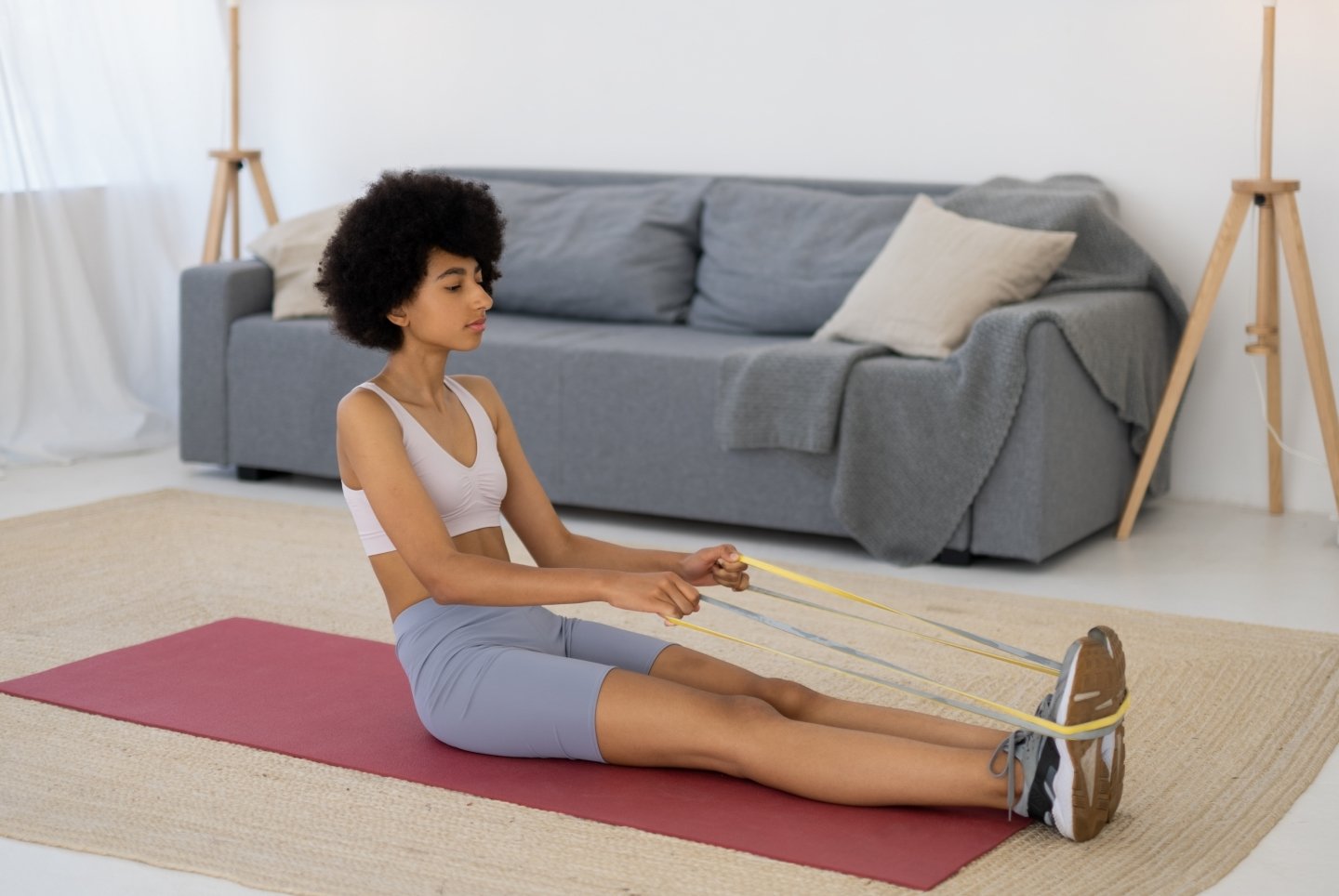
Saturday Morning Flow
Day 6: Let Your Habit Work in Real Life — 7-Day Morning Flow Challenge
Welcome to Day 6 of the 7-Day Morning Flow Challenge.
You have made it through most of the week.
And now comes something that can quietly challenge a new habit more than motivation ever could:
The weekend.
Weekdays tend to have structure.
You may wake up at a familiar time.
You may have work waiting.
Your morning may follow a predictable sequence.
Then the weekend arrives and everything shifts.
You might sleep later.
You might stay up later the night before.
Breakfast may happen at a completely different time.
Plans may change.
You may spend more time with family or friends.
You may go somewhere.
Or you may simply stay home and enjoy having nowhere you absolutely need to be.
And that is exactly why Day 6 matters.
A habit that only works when your schedule is perfect is not yet a very flexible habit.
Real life is unpredictable.
Your morning practice needs to be able to live inside that reality.
Today is about keeping the grounding intention while letting go of unnecessary rigidity.
You don't need the exact same time.
You don't need the exact same environment.
You don't even need the exact same amount of time.
Just find a small moment to arrive in your body before the day carries you somewhere else.
Weekends Don't Cancel Progress
There is a common mindset around routines:
“Monday to Friday I was doing well, but the weekend ruined everything.”
This way of thinking can make weekends feel like a break from all progress.
You follow a routine for several days, then Saturday arrives and the structure disappears.
You wake up late.
You eat at unusual times.
You skip your morning practice.
You stay up late.
And suddenly it feels as though the whole routine has disappeared.
But one flexible day does not erase five days of practice.
In fact, learning to adapt may be part of the progress.
A habit that survives a change in schedule is often more useful than one that depends on everything staying exactly the same.
Today, don't try to recreate a weekday.
Create a weekend version.
Your Morning Does Not Need a Perfect Start Time
Maybe you normally practice at 7:00 AM.
Today you wake up at 9:30.
That's okay.
Maybe you sleep until 11:00.
That's okay too.
The goal isn't:
“I must do my morning flow at the correct time.”
The goal is:
“At some point after waking, I will give myself a few minutes to arrive.”
That distinction creates flexibility.
You are keeping the behavior while allowing the schedule to change.
This matters because life will always contain exceptions.
Travel.
Family events.
Late nights.
Work emergencies.
Appointments.
Social plans.
Sick days.
Unexpected mornings.
A routine that can bend is more likely to survive them.
Day 6 Is a Softer Practice
Today's practice can be shorter and less structured.
You don't need to treat it like an appointment.
When you wake up, give yourself a few minutes before immediately rushing into the day.
Sit somewhere comfortable.
Take a few breaths.
Notice your body.
Stretch gently.
Look around the room.
Ask yourself how you are feeling.
That's enough.
If you have five minutes, use five minutes.
If you have ten, stay longer.
If you only have two, use two.
The point is not to hit a particular number.
The point is to maintain the connection.
The Day 6 Weekend Flow
Step 1: Wake Up Without Rushing
When you wake up today, don't immediately decide that you are already behind.
There may be nowhere you need to be.
Let yourself wake up.
Sit on the edge of the bed.
Take a breath.
Notice how your body feels after sleeping.
Maybe you slept well.
Maybe you didn't.
Maybe you stayed up later than usual.
Maybe you feel energetic.
Maybe you're still tired.
There is no need to judge any of it.
You are simply checking in.
Step 2: Take a Few Natural Breaths
Take several slow, comfortable breaths.
You don't need to use a complicated breathing technique.
Just notice the inhale.
Notice the exhale.
Let your attention settle for a moment.
If your mind is already planning the day, that's fine.
Notice the thoughts.
Then come back to your breathing.
You are practicing the same skill you've been practicing all week:
returning.
Step 3: Move in Whatever Way Feels Good
Your weekend movement does not need to follow a routine.
Stretch your arms.
Roll your shoulders.
Walk around your room.
Stand by a window.
Take a short walk outside if you feel like it.
Move your body in a way that feels comfortable.
There is no performance target.
You are simply reconnecting with yourself physically.
Step 4: Ask What You Need Today
Instead of creating a strict plan, ask:
“What do I need from today?”
Maybe you need rest.
Maybe you want social time.
Maybe you need to get things done.
Maybe you want some quiet.
Maybe you need to get outside.
Maybe you simply want an unstructured day.
Listen to the answer.
It doesn't mean you have to follow every impulse.
It simply gives you information.
Step 5: Set a Flexible Intention
Choose one word or short phrase for the day.
Maybe:
“Ease.”
“Presence.”
“Balance.”
“Enjoy.”
“Slow down.”
“Listen.”
Keep it loose.
Your intention is not a schedule.
It is something you can return to throughout the day.
Food Freedom Does Not Require a Perfect Schedule
This is especially important on weekends.
If you are working on your relationship with food, it can be tempting to believe that you need perfectly timed meals, perfectly controlled portions, and a perfectly organized routine to stay on track.
Real life doesn't work that way.
Your eating schedule may change.
You may eat breakfast later.
You may have lunch earlier.
You may eat with friends.
You may have a meal you don't normally eat during the week.
You may enjoy dessert.
You may snack.
None of these things automatically mean you have lost control.
Food freedom is not about creating a life where every meal follows a rigid set of rules.
It is about developing enough awareness that food can exist in your life without constantly becoming a source of guilt, fear, or all-or-nothing thinking.
A Flexible Routine Can Support Mindful Eating
The same principle from your morning practice can apply to food.
Pause.
Notice.
Choose.
Before eating, when practical, ask yourself:
“Am I hungry?”
Then:
“What would feel satisfying?”
And:
“How do I want to feel afterward?”
These questions aren't meant to turn eating into an examination.
They simply bring a little awareness into the moment.
Sometimes you will be genuinely hungry.
Sometimes you'll want food because it looks delicious.
Sometimes you'll eat because you're socializing.
Sometimes you may realize you are bored.
You don't have to label every reason as good or bad.
You are learning to notice.
Don't Turn the Weekend Into a Test
A common mistake is treating the weekend like an exam.
Monday through Friday:
“I was good.”
Saturday:
“I have to be careful.”
Sunday:
“I need to get back on track.”
This creates a cycle where food becomes connected to restriction and compensation.
A more sustainable approach is to let Saturday and Sunday simply be part of your normal life.
You can enjoy food.
You can eat differently from your weekday routine.
You can have social meals.
You can sleep later.
And you can still return to your grounding practice.
Nothing has been ruined.
What If You Wake Up Very Late?
Don't skip the practice because you think it is no longer technically morning.
The name doesn't matter.
If you wake up at noon, you can still take five minutes to ground yourself.
If you wake up in the afternoon after a late night, you can still pause.
The practice is not dependent on the clock.
It's dependent on your willingness to create a small moment of awareness.
This is especially useful for people whose schedules aren't perfectly predictable.
The habit becomes:
After I wake up, I check in with myself.
Not:
At exactly 8:00 AM, I must complete a five-minute routine.
The first version is much easier to carry into real life.
Your Body Doesn't Need the Same Schedule Every Day
Your body is not a machine that has to operate on an identical timetable every day.
Some mornings you will have more energy.
Some mornings you will have less.
Some days you will sleep longer.
Some days you will be awake earlier.
Your routine can acknowledge that.
A flexible morning flow might look like:
High energy:
Five to ten minutes of breathing, movement, and reflection.
Medium energy:
Three to five minutes of grounding and gentle movement.
Low energy:
Two minutes of breathing, body awareness, and one intention.
All three versions maintain the same basic habit.
That's flexibility.
What Actually Makes a Habit Strong?
It is easy to think that a habit becomes strong because you never miss.
But real life makes that unrealistic.
A stronger habit is often one you know how to return to.
You miss one day.
You come back.
Your schedule changes.
You adapt.
You travel.
You find a smaller version.
You have a busy weekend.
You do two minutes instead of ten.
The behavior survives because it is not dependent on perfect conditions.
That is what you are practicing today.
Bring Awareness Into the Rest of Saturday
Once your morning flow is finished, you don't need to think about mindfulness for the rest of the day.
Just occasionally notice yourself.
Before eating, pause.
Before reaching for your phone, notice.
When you feel stressed, breathe.
When you are enjoying something, actually notice that too.
Mindfulness is not only about difficult emotions or cravings.
It is also about being present for experiences that feel good.
If you're having a meal you enjoy, taste it.
If you're spending time with people you care about, be there.
If you're resting, let yourself rest.
If you're outside, notice your surroundings.
You don't have to turn every moment into a meditation.
Just be there for some of it.
When Weekend Cravings Show Up
Weekend cravings can feel different because your normal structure changes.
You may have more free time.
You may be around different foods.
You may stay up later.
You may associate certain foods with weekends.
Rather than trying to control every craving, use the skill you've been practicing all week.
Pause.
Take a breath.
Notice the craving.
Ask:
“What do I want right now?”
If the answer is food, you can decide what to eat.
If the answer is a break, take one.
If you're genuinely hungry, eat.
If you're not sure, give yourself a moment.
There is no requirement to make the “perfect” choice.
The goal is simply to make the moment a little less automatic.
You Can Enjoy Food Without Turning It Into a Failure
This is worth repeating.
Eating something you enjoy does not mean you failed the challenge.
Having dessert does not erase your morning practice.
Eating more than usual at a social gathering does not mean the entire weekend is ruined.
And one meal does not require compensation.
You can simply continue.
The next meal is another meal.
The next morning is another morning.
The next decision is another decision.
This mindset helps prevent the cycle of:
“I already messed up, so I might as well keep going.”
Instead:
“That happened. I'm still here. I can continue normally.”
A Two-Minute Weekend Version
If your weekend is busy, here's all you need.
Sit comfortably.
Take three slow breaths.
Notice your body.
Relax your shoulders.
Look around and notice three things you can see.
Ask:
“How do I want to experience today?”
Choose one word.
Then go enjoy your morning.
That's your Day 6 practice.
No guilt.
No catching up.
No need to repeat the longer session later.
Day 6 Reflection
Take a moment to consider:
Did my schedule change today?
Was I able to keep the practice flexible?
Did I notice any difference between weekday and weekend eating?
Do I feel pressure to follow a perfect routine?
What happens when I stop treating an imperfect day as a failed day?
You don't need perfect answers.
You are simply learning what works for you in real life.
Day 6 Checklist
☐ I grounded myself after waking up.
☐ I took a few slow breaths.
☐ I gently moved my body.
☐ I accepted that my weekend schedule may be different.
☐ I avoided turning flexibility into failure.
☐ I noticed my hunger and cravings without automatically judging them.
☐ I allowed food to be part of my life without needing perfection.
☐ I remembered that a flexible practice still counts.
Tomorrow Is the Final Day
You're almost there.
But don't rush through today just because Day 7 is waiting.
Today has its own lesson.
A routine isn't truly useful if it only works when everything is predictable.
Your real life will contain late mornings.
Busy weekends.
Unexpected plans.
Different meal times.
Travel.
Stress.
Tiredness.
Celebrations.
Quiet days.
The goal is not to build a routine that survives only perfect circumstances.
It is to build something flexible enough to live alongside your actual life.
That's especially important when you're working on your relationship with food.
Food freedom does not mean every day will look the same.
It means your sense of balance does not have to disappear when the schedule changes.
Let Today Be Real
Maybe today's morning practice was five minutes.
Maybe it was two.
Maybe you did it later than usual.
Maybe you woke up late and almost skipped it.
Maybe you remembered halfway through the day and took a few breaths then.
It still counts.
Because today wasn't about perfect timing.
It was about proving to yourself that the habit can bend without breaking.
You don't need to control every variable.
You need something you can return to.
So let your weekend be a weekend.
Eat normally.
Rest when you need to.
Enjoy yourself.
Spend time with people.
Do what matters to you.
And whenever you notice yourself rushing, reacting, or disconnecting from your body, remember what you've been practicing all week:
Pause.
Breathe.
Notice.
Return.
That's enough for Day 6.
One more morning remains.
But for now, let this one count too.