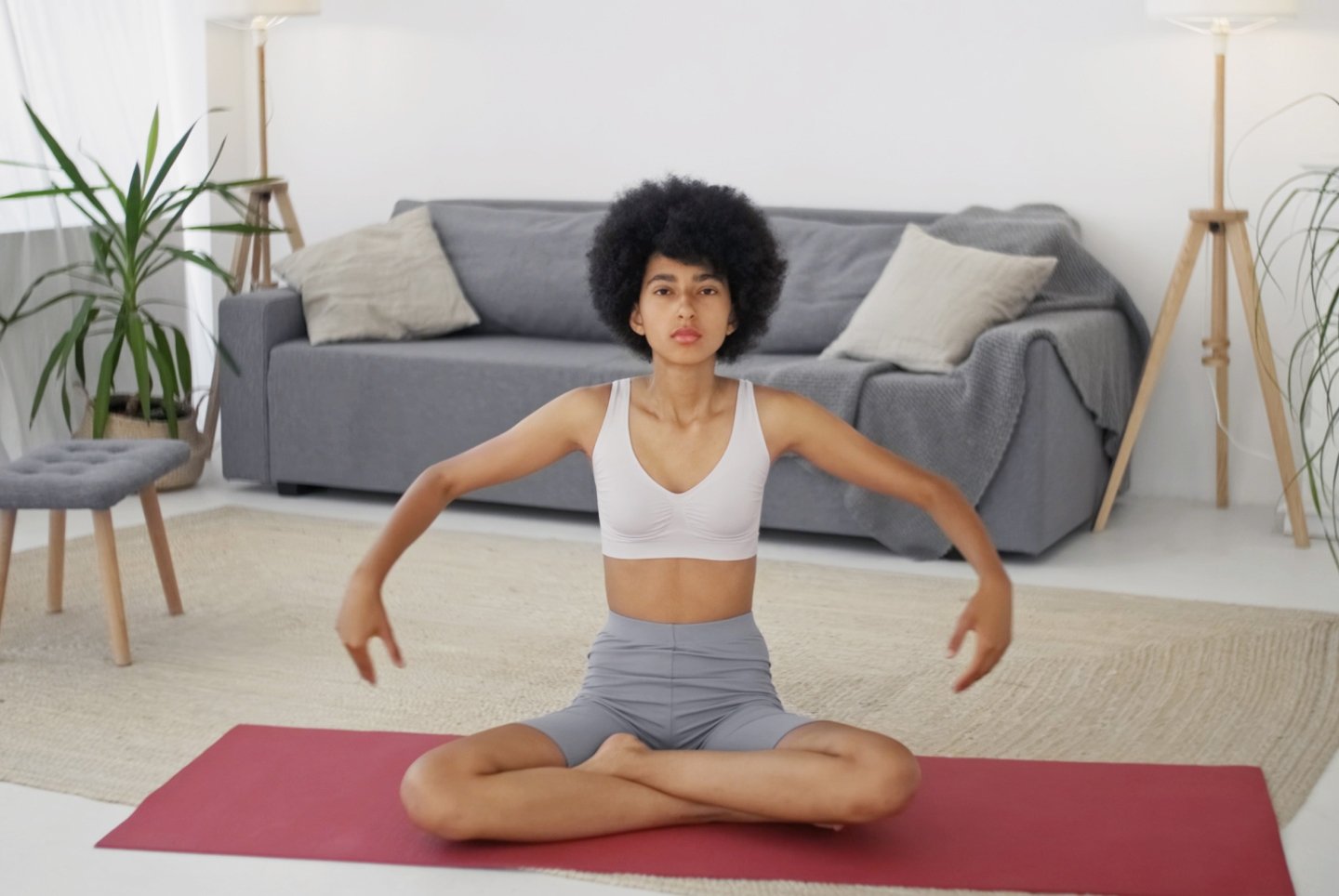
Tuesday Morning Flow
Day 2: Build Momentum With Your 7-Day Morning Flow
Day two is not about doing more.
It is not about making yesterday’s practice longer, deeper, or more impressive. It is simply about showing up again.
If you completed Day 1, you already know what it feels like to pause before the day starts moving too quickly. Today, you get to return to that same space. You do not need to prove that yesterday “worked.” You do not need to make today better than yesterday.
You just need to begin.
And if yesterday never happened at all, that is completely fine too.
Day 2 is still a perfectly good place to start.
There is no missed-day penalty here. No catching up. No restarting the entire challenge from zero. One morning that did not go according to plan does not erase your intention to take care of yourself.
The goal of this 7-Day Morning Flow Challenge is not perfection.
It is familiarity.
With repetition, a grounding morning practice can gradually stop feeling like another task on your list and start feeling like something your body recognizes. Something simple. Something predictable. Something you can return to before the noise of the day takes over.
Today, keep it simple.
Just show up.
Why Day Two Matters
Starting something new can feel surprisingly easy for one day.
The first day has novelty behind it. There is a challenge, a fresh idea, and the feeling that you are beginning something different.
The second day is where the practice starts becoming real.
You are no longer simply trying something new. You are beginning to repeat it.
That repetition matters because habits are rarely created through one perfect experience. They develop through returning to the same behavior often enough that it becomes familiar.
This does not mean you need to perform your morning flow at exactly the same time every day.
It does not mean you need perfect conditions.
It simply means giving yourself another opportunity to pause, breathe, and arrive in your body before immediately handing your attention over to everything else.
Day two is therefore less about motivation and more about showing up.
You do not have to feel inspired.
You do not have to wake up feeling calm.
You do not even have to particularly feel like doing the practice.
You can simply begin.
If Yesterday Went Well, Don't Try to Beat It
Maybe yesterday felt surprisingly good.
Maybe you noticed that you were less rushed.
Maybe you enjoyed having a few quiet minutes before checking your phone. Maybe the breathing helped you feel more present, or the gentle movement helped you wake up.
Whatever happened, you do not need to recreate it perfectly today.
This is important because it is easy to turn a helpful practice into another performance.
You have a good day and immediately think:
“I need to do it even better tomorrow.”
Then the five-minute practice becomes ten minutes.
The simple movement becomes a full workout.
The quiet morning becomes another opportunity to optimize yourself.
And suddenly, the thing that was supposed to create a little space in your morning has become another responsibility.
You do not need that.
If yesterday went well, let it simply be a good experience.
Then return today.
The goal is not to improve every single morning.
The goal is to make returning feel normal.
If You Missed Day One, Start Here
Maybe you intended to do Day 1 but never got around to it.
Maybe you slept through your alarm.
Maybe work, family, your phone, or simply a tired morning got in the way.
Nothing needs to be fixed.
You do not need to complete yesterday's practice before you are allowed to continue.
You do not need to feel guilty.
And you definitely do not need to wait until next Monday to begin again.
Start today.
This is one of the most useful ideas to carry throughout the entire seven-day challenge:
Missing one day does not mean you have failed.
The problem usually comes when one missed day becomes a reason to stop completely.
You miss Monday, so you decide you will restart next week.
Then next week becomes next month.
A small interruption turns into abandoning the habit.
Instead, practice returning.
Missed yesterday?
Come back today.
Had a rushed morning?
Come back tomorrow.
Forgot for three days?
Start again on the fourth.
The ability to return is part of the practice.
Day 2 Morning Flow
Today's practice can be almost identical to Day 1.
That is intentional.
You are not supposed to constantly add new techniques just to keep yourself interested. The repetition is part of what makes the practice familiar.
Give yourself around five minutes if you can.
If you have more time, you can stay longer.
If you only have two minutes, two minutes is enough to begin.
Step 1: Arrive Before You Rush
Before reaching for your phone, take a moment to notice that you are awake.
You do not need to immediately figure out what needs to happen next.
Sit comfortably on your bed, a chair, or wherever you naturally spend the first few minutes of your morning.
Let your body settle.
Notice the surface underneath you.
Notice the temperature of the room.
Notice whether your body feels heavy, rested, stiff, tense, or comfortable.
There is nothing you need to change yet.
You are simply arriving.
Step 2: Take a Few Slow Breaths
Close your eyes if that feels comfortable.
Take a slow breath in through your nose.
Then gently breathe out.
Repeat several times without forcing the breath.
You are not trying to achieve a special state of relaxation.
You are simply giving yourself a few moments where you are not reacting to anything.
No notification needs a response.
No email needs an answer.
No task needs to be completed.
For these few breaths, you can simply be where you are.
Step 3: Wake Up the Body Gently
Add a little movement.
Roll your shoulders slowly.
Stretch your arms overhead.
Move your neck gently from side to side.
Flex and relax your hands.
Take a few slow movements through your legs.
You do not need a workout.
The purpose is simply to reconnect with your physical body after several hours of sleep.
Keep everything comfortable and easy.
Think of this as telling your body:
“We're awake. We have time to arrive.”
Step 4: Notice How You Feel
Take a few seconds to check in.
Ask yourself:
How does my body feel this morning?
Then:
What is my mind doing right now?
Maybe your mind is quiet.
Maybe it is already racing.
Maybe you are thinking about work.
Maybe you are hungry.
Maybe you are still tired.
Maybe you woke up irritated for no obvious reason.
You do not need to fix any of it.
Just notice.
This small check-in can help you create some distance between what you are experiencing and what you automatically do next.
Instead of immediately reacting, you have given yourself a moment to observe.
Step 5: Choose One Simple Intention
Before finishing, choose one simple intention for the day.
Not ten goals.
Not a complicated productivity plan.
Just one.
It could be:
“I will slow down when I notice myself rushing.”
Or:
“I will take care of my body today.”
Or:
“I don't need to do everything at once.”
Or simply:
“I will come back to the present moment.”
Your intention is not a promise that the entire day will go perfectly.
It is something you can remember when the day becomes busy.
Make the Practice Easy to Repeat
A habit becomes easier when there is less friction around it.
If you need to prepare ten things before starting your morning practice, you are giving yourself more opportunities to skip it.
Keep the setup almost boring.
You can do the practice beside your bed.
You can do it sitting on a chair.
You do not need special clothing.
You do not need equipment.
You do not need a perfect meditation space.
You do not even need complete silence.
The more accessible the practice is, the easier it becomes to repeat.
And repetition is what you are working on during these seven days.
Your Phone Can Wait a Few Minutes
One of the simplest ways to protect your morning grounding practice is to delay your phone for a few minutes.
You do not have to create a strict “no phone for one hour” rule.
That may work for some people, but it can also become unnecessarily difficult.
Start smaller.
Give yourself five minutes.
Before opening social media, messages, email, news, or notifications, give your attention to yourself first.
This creates a small difference in how the day begins.
Instead of waking up and immediately receiving information from everyone else, you get a few minutes to notice what is happening inside you.
Then you can pick up the phone.
The point is not to treat your phone as the enemy.
It is simply about deciding that your attention belongs to you for the first few minutes of the day.
When You Don't Feel Like Doing It
There will probably be mornings when you do not want to do the practice.
That is normal.
You may wake up late.
You may feel tired.
You may be distracted.
You may think, “I'll do it tomorrow.”
This is where keeping the practice small becomes useful.
On those mornings, don't negotiate with yourself about whether you can complete the entire routine.
Just start with one breath.
Then another.
Roll your shoulders once.
Notice your feet on the floor.
That's enough to begin.
Often, the hardest part is not the practice itself.
It is the transition from doing nothing to doing something.
Make that transition as small as possible.
You Don't Need to Feel Different Immediately
Mindfulness practices are sometimes presented as though you should finish feeling completely peaceful, focused, and refreshed.
Real mornings are rarely that clean.
You might finish the practice and still feel tired.
You might still have a busy mind.
You might still be thinking about everything you need to do.
That does not mean the practice failed.
The purpose is not to force yourself into a particular emotional state.
It is to create a moment of awareness before automatically moving into the rest of your day.
Sometimes that is all you need.
A pause.
A breath.
A little movement.
A chance to notice yourself.
The Difference Between Routine and Rule
There is an important difference between creating a routine and creating another rule.
A rule says:
“I must do this perfectly every morning.”
A routine says:
“This is something I like returning to.”
The first creates pressure.
The second creates familiarity.
During this seven-day challenge, try to move toward the second mindset.
You are not collecting perfect days.
You are teaching yourself that a few quiet minutes can have a place in your morning.
Some days will be easy.
Some will be rushed.
Some will be messy.
The practice can exist inside all of them.
A Two-Minute Version for Busy Mornings
If you genuinely do not have five minutes today, use this version.
Sit or stand comfortably.
Take three slow breaths.
Notice your shoulders and let them drop slightly.
Stretch your arms.
Feel your feet on the floor.
Ask yourself:
“What do I need from myself today?”
Take one final breath.
Then continue with your morning.
That's it.
Do not underestimate a two-minute practice simply because it is short.
A small action that you actually repeat can become more meaningful than a longer routine you constantly postpone.
Day 2 Reminder
Today is not about proving that you can maintain a seven-day streak.
It is about practicing the act of returning.
If yesterday happened, build gently on it.
If yesterday did not happen, begin today.
Either way, you are in the same place:
Right here.
You do not need to catch up.
You do not need to compensate.
You do not need to make today's practice longer because you missed yesterday.
Just show up.
Take a few breaths.
Move your body gently.
Notice how you feel.
Choose one simple intention.
Then let the rest of the morning unfold.
Day 2 Checklist
Before moving into the rest of your day, see if you can check off these simple steps:
☐ I gave myself a few quiet minutes.
☐ I took several slow breaths.
☐ I moved my body gently.
☐ I noticed how I felt without judging it.
☐ I chose one simple intention.
☐ I showed up, even if the practice wasn't perfect.
That's enough.
Final Thought for Day Two
The first day is about beginning.
The second day is about returning.
And returning is where a practice slowly becomes familiar.
You may not notice a dramatic difference between Day 1 and Day 2. You are not supposed to.
Something more subtle is happening.
You are showing your body that this small pause has a place in your morning.
You are creating a little space before the demands of the day arrive.
You are practicing the idea that taking care of yourself does not have to be complicated.
And eventually, the hope is that you won't need to convince yourself to do it.
You'll simply recognize it as part of your morning.
So don't overthink today.
Don't try to make it impressive.
Don't worry about whether you are doing it perfectly.
Just show up.
Take a breath.
Arrive.
And begin again.