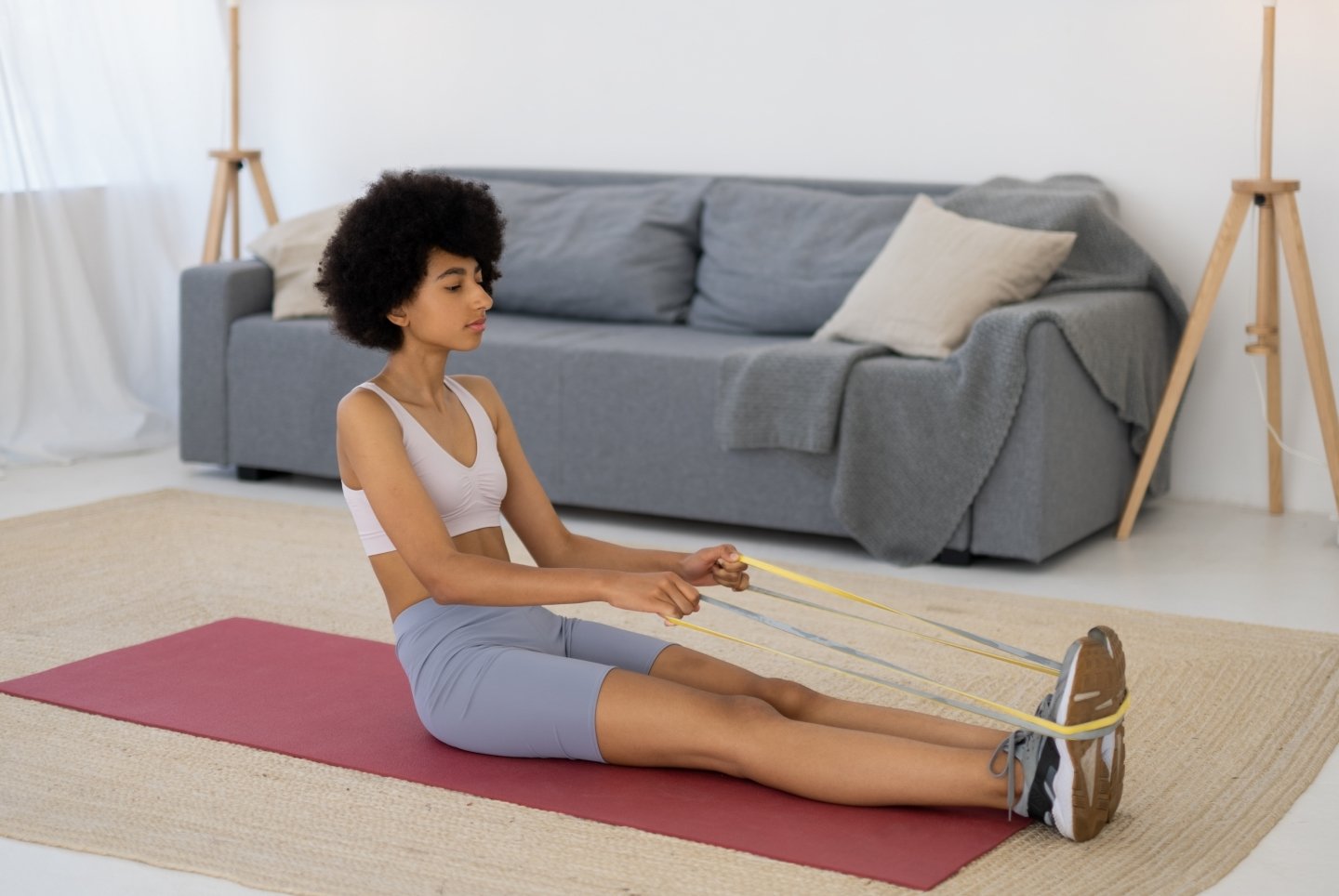
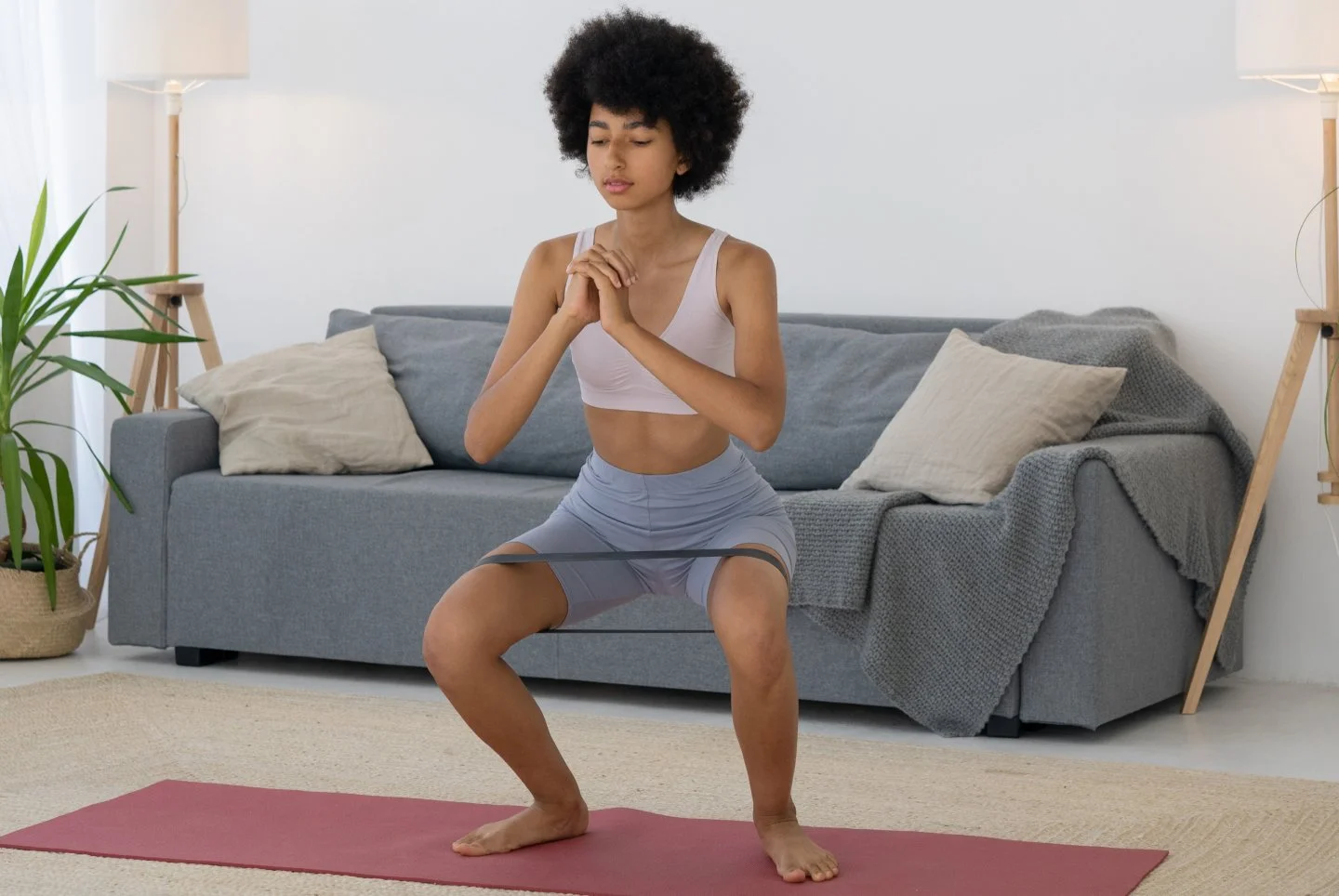
Practicing Mindfulness
Practicing Mindfulness: A Simple Guide to Being More Present
Mindfulness can sound like a complicated concept.
You may hear about meditation, breathing exercises, body scans, awareness, being present, and a dozen different techniques.
But at its simplest, mindfulness means something much more ordinary:
Noticing what's happening in your body and mind right now, without immediately trying to fix it or judge it.
That's it.
You notice your breath.
You notice that your shoulders are tense.
You notice that you're hungry.
You notice a craving.
You notice that you're stressed.
You notice the thought telling you to reach for food.
And instead of immediately reacting, you pause.
That pause might last ten seconds.
It might last a minute.
Sometimes it might be longer.
The point isn't to stop having thoughts, emotions, cravings, or difficult moments.
The point is to become familiar with noticing them before they automatically turn into action.
This is foundational mindfulness practice.
And while it can be useful during meditation, you don't need to sit cross-legged in a quiet room for it to matter.
You can practice mindfulness while eating breakfast.
While opening the fridge.
While walking to another room.
While sitting at your desk.
While feeling stressed.
While wanting a snack.
Or simply while noticing that you're having a difficult day.
What Is Mindfulness in Plain Terms?
Imagine you're sitting at your desk working.
You've been there for several hours.
Suddenly, you notice yourself opening a food delivery app.
You weren't consciously thinking:
“I'm hungry, so I'm going to order food.”
You simply did it.
That's autopilot.
Mindfulness introduces a small interruption.
You notice:
“I'm opening the app.”
Then:
“What am I feeling right now?”
Maybe you're hungry.
Maybe you're bored.
Maybe you're stressed.
Maybe you need a break.
Maybe you genuinely want the food.
The important part isn't finding the “correct” explanation.
It's noticing before automatically continuing.
That is mindfulness.
It's the difference between immediately reacting and giving yourself a moment to see what's happening.
Mindfulness Isn't About Stopping Your Thoughts
A common misconception is that mindfulness means having a completely empty mind.
That's not realistic.
Your brain is going to think.
You will remember things.
You'll plan.
You'll worry.
You'll replay conversations.
You'll think about food.
You'll think about work.
You'll get distracted.
That's normal.
Mindfulness isn't about preventing thoughts.
It's about noticing when your attention has wandered and gently bringing it back.
For example, you might focus on your breathing.
Then suddenly realize:
“I need to reply to that message.”
You notice the thought.
Then return to your breath.
A minute later, another thought appears.
You notice it.
Return again.
That returning is the practice.
You aren't failing because your mind wandered.
The moment you notice that it wandered is actually the moment you're practicing awareness.
The Pause Is the Important Part
A lot can happen in a few seconds.
You feel an emotion.
Your body responds.
A thought appears.
An urge follows.
Then you act.
The entire process can happen so quickly that it feels automatic.
Mindfulness doesn't necessarily remove the urge.
Instead, it can help you notice the sequence.
For example:
Stress → craving → reaching for food
can become:
Stress → notice → pause → check in → choose
The craving may still be there.
The stress may still be there.
And you may still choose the food.
But now there was a moment of awareness in between.
That moment matters.
Start With Your Body
The easiest way to practice mindfulness is often through physical sensations.
Your body is happening right now.
You don't have to think your way into the present moment.
Just notice what's already there.
Try this:
Sit comfortably.
Take one natural breath.
Then notice your feet.
What do they feel like?
Warm?
Cool?
Relaxed?
Pressing against the floor?
Then notice your hands.
Your shoulders.
Your jaw.
Your stomach.
Your face.
You don't need to change anything.
You're simply noticing.
If you find tension, you don't have to force it to disappear.
If you feel restless, you don't need to become calm.
If you're hungry, you don't need to ignore it.
The practice is:
Notice.
That's enough.
Mindfulness and Eating
Eating is one of the easiest places to bring mindfulness into everyday life because we do it regularly.
You don't need to change your diet to practice mindful eating.
Start with one meal or snack.
Before eating, pause for a few seconds.
Ask:
“How hungry am I right now?”
Then notice what you're experiencing.
You might be very hungry.
You might be slightly hungry.
You might be craving something specific.
You might be eating because it's your normal meal time.
You might be stressed.
You might be eating socially.
You might not know.
That's okay.
There isn't a perfect answer.
While You Eat
Try putting your phone aside for the first few bites if that's realistic.
Notice the food.
Notice the smell.
Notice the texture.
Notice the temperature.
Notice the taste.
Then notice your body.
Are you still hungry?
Are you enjoying the meal?
Are you eating quickly?
Are you distracted?
Again, this isn't about judging yourself.
You aren't trying to become a perfect mindful eater.
You're simply becoming more aware of an experience that often happens automatically.
Mindfulness Doesn't Mean Eating Less
This is an important distinction.
Mindfulness isn't another diet technique.
The goal isn't to make you eat smaller portions.
It isn't about suppressing hunger.
It isn't about avoiding dessert.
It isn't about forcing yourself to stop eating after a certain number of bites.
You may eat the same amount as you normally would.
The difference is that you're more present while doing it.
If you're hungry, you can eat.
If you want something because you genuinely enjoy it, you can enjoy it.
If you realize you're eating because you're stressed, you can still choose to eat.
Mindfulness gives you information.
It doesn't make the decision for you.
Notice Cravings Without Fighting Them
Cravings can become much more intense when you treat them like an enemy.
You might think:
“I absolutely cannot have this.”
Then your attention becomes focused on the exact thing you're trying not to think about.
Instead, try observing the craving.
Where do you feel it?
Is it in your stomach?
Your mouth?
Your chest?
Does it feel like restlessness?
Anticipation?
A strong desire?
How intense is it right now?
Does it change when you take a few breaths?
Does it get stronger?
Does it stay the same?
Does it eventually become less intense?
You're not trying to make the craving disappear.
You're studying the experience.
That shift from fighting to observing can make the moment feel less automatic.
A One-Minute Craving Pause
The next time you experience a strong urge to eat, try this:
Step 1: Stop
Don't immediately act.
Just pause for a few seconds.
Step 2: Breathe
Take two or three comfortable breaths.
Step 3: Notice
Ask:
“What am I feeling right now?”
Step 4: Ask
“What do I actually need?”
Maybe it's food.
Maybe it's rest.
Maybe it's a break.
Maybe it's comfort.
Maybe it's stimulation.
Maybe you don't know.
Step 5: Choose
Now decide what you want to do.
If you still want the food, eat it.
The point was never to prevent the choice.
The point was to make the choice with a little more awareness.
Mindfulness During Stress
Food isn't the only place where autopilot appears.
Stress can trigger automatic behaviors throughout the day.
You might scroll.
You might procrastinate.
You might become irritable.
You might reach for coffee.
You might snack.
You might keep working long after your concentration has disappeared.
Mindfulness gives you a chance to notice the stress before automatically responding to it.
Try asking:
“Where do I feel stress in my body?”
Maybe your shoulders are tight.
Maybe your stomach feels uncomfortable.
Maybe your jaw is clenched.
Maybe your breathing is faster.
Maybe you feel restless.
Then ask:
“What happens if I pause for 30 seconds?”
You don't have to solve the source of the stress.
Just notice your response to it.
Practice in Ordinary Moments
You don't need to wait for an emotional eating episode to practice mindfulness.
In fact, ordinary moments are often the best place to learn.
Try it while:
Brushing your teeth
Drinking tea or coffee
Washing your hands
Walking down a hallway
Waiting for a page to load
Standing in a queue
Taking a shower
Eating breakfast
Sitting at your desk
Getting into bed
Choose one.
For 30 seconds, pay attention to what's happening.
Feel your feet.
Notice your breathing.
Hear the sounds around you.
Notice your body.
When your mind wanders, come back.
That's mindfulness.
The 30-Second Practice
Here's one you can use almost anywhere.
Stop.
Take one breath.
Notice your feet.
Relax your shoulders if they are tense.
Notice what you're feeling.
Ask:
“What is happening right now?”
Don't solve it.
Don't judge it.
Just notice.
Then continue.
You can repeat this several times throughout the day.
The more familiar the pause becomes, the less unusual it feels.
Why Familiarity Matters
At first, pausing can feel awkward.
You're used to reacting quickly.
A notification appears and you check it.
You feel stressed and reach for food.
You become bored and open social media.
You feel tired and grab another coffee.
The sequence happens before you've really noticed it.
Practicing mindfulness in low-pressure situations makes the act of pausing more familiar.
Then, when a stronger emotion or craving appears, you already know what it feels like to stop.
You're not learning the skill for the first time in the middle of a difficult moment.
You've practiced it when things were easy.
That's why short, ordinary mindfulness practices matter.
You Will Still React Sometimes
Mindfulness doesn't mean you'll suddenly make perfect choices.
You will still eat when you're stressed.
You will still scroll when you're bored.
You will still lose patience.
You will still have cravings.
You will still forget to pause.
That's part of being human.
The goal isn't to eliminate automatic behavior completely.
It's to create more moments where you notice it.
Maybe you used to realize you were stress-eating after 20 minutes.
Now you notice after five.
That's awareness.
Maybe you used to recognize hunger only when you were extremely hungry.
Now you notice it earlier.
That's awareness.
Maybe you still eat the snack, but you realize you genuinely wanted it and enjoy it without turning it into guilt.
That's also awareness.
Progress doesn't always look like doing less.
Sometimes it looks like being more present while you do it.
Don't Turn Mindfulness Into Another Rule
There's a trap here.
You can start with mindfulness as a way to become more connected to yourself and accidentally turn it into another performance.
“I need to meditate every day.”
“I missed yesterday.”
“I wasn't mindful enough.”
“I got distracted.”
“I did it wrong.”
Now the practice has become another source of pressure.
You don't need that.
Mindfulness is not something you pass or fail.
If you notice that you've been distracted for ten minutes, the moment you notice is your opportunity to return.
If you forget to practice for three days, you can begin again.
If you only have 30 seconds, use 30 seconds.
There is no perfect streak.
Mindfulness Is Not the Same as Being Calm
Another common misunderstanding is that mindfulness should always make you feel peaceful.
Sometimes it might.
Sometimes it won't.
You can be mindful while feeling angry.
You can be mindful while anxious.
You can be mindful while hungry.
You can be mindful while excited.
You can be mindful while frustrated.
The goal isn't:
“I must feel calm.”
It's:
“I can notice what I'm feeling.”
That's a much more realistic practice.
If you are angry, you don't have to pretend you're calm.
You can notice:
“I'm angry.”
You can feel the physical sensations.
You can notice the thoughts.
Then you can decide what to do next.
A Simple Daily Mindfulness Practice
If you're new to mindfulness, keep your practice extremely simple.
Set aside five minutes.
Sit somewhere comfortable.
Minute 1: Notice Your Body
Feel your feet.
Notice your hands.
Relax your jaw if it feels tense.
Minute 2: Notice Your Breath
Feel each inhale and exhale.
Don't force the breathing.
Minute 3: Notice Your Thoughts
When thoughts appear, simply notice them.
You don't have to follow every thought.
Minute 4: Notice Your Feelings
Ask:
“What am I feeling right now?”
Don't judge the answer.
Minute 5: Return
Take a final breath.
Notice where you are.
Then continue your day.
That's enough.
Bring Mindfulness Into Your Meals
You don't have to make every meal a meditation.
Choose one meal each day.
For the first few minutes:
Put the phone down if possible.
Slow down slightly.
Notice the food.
Notice your hunger.
Notice your pace.
Notice when your attention leaves the meal.
Then come back.
That's it.
Over time, you may become more familiar with your own eating patterns.
You may notice that certain situations make you eat quickly.
You may notice that certain emotions bring cravings.
You may notice that you enjoy some foods more when you aren't distracted.
You may notice that sometimes you're hungry and sometimes you're looking for something else.
The goal isn't to judge those patterns.
It's to see them clearly.
The Space Between Urge and Action
This is where mindfulness becomes particularly powerful as a daily skill.
There is often a tiny space between an internal experience and what you do next.
You feel something.
Then you respond.
The space can be very small.
Mindfulness helps you notice that space.
Maybe you can't always change what you feel.
But sometimes you can change how quickly you respond.
That can apply to food.
It can apply to stress.
It can apply to your phone.
It can apply to conversations.
It can apply to habits.
It can apply to almost anything.
The pause doesn't guarantee a different decision.
It simply gives you the opportunity to make one.
A Simple Mindfulness Checklist
You don't need to do everything below every day.
Use it as a reminder:
Notice your body.
Notice your breathing.
Notice your thoughts.
Notice your emotions.
Notice hunger without judging it.
Notice cravings without fighting them.
Pause before automatic actions when you can.
Ask what you actually need.
Make your choice consciously.
Return when your attention wanders.
The most important item is the last one.
Return.
Start With One Moment Today
Don't wait for a perfect meditation space.
Choose one ordinary moment today.
Maybe it's your next meal.
Maybe it's when you make tea.
Maybe it's when you feel a craving.
Maybe it's when you notice yourself becoming stressed.
Stop for a few seconds.
Take a breath.
Notice your body.
Ask:
“What's happening right now?”
You don't need to fix the answer.
You don't need to like the answer.
You don't need to change the answer.
Just notice.
Then decide what comes next.
Mindfulness Is a Practice of Returning
You will get distracted.
You will forget.
You will react automatically.
You will have days when you don't feel like practicing.
That's okay.
The practice isn't becoming perfectly aware every moment of every day.
It's learning how to return.
Return to the breath.
Return to the body.
Return to the meal.
Return to the present moment.
Return after the craving.
Return after the stressful conversation.
Return after the difficult day.
Every return makes the pause a little more familiar.
And the more familiar that pause becomes, the easier it can be to notice moments that once felt completely automatic.
You may still have the craving.
You may still feel stressed.
You may still eat the food.
You may still have the difficult emotion.
But now you are there for the experience.
You're not completely swept away by it.
That's the foundation.
Not perfection.
Not control.
Not eliminating difficult feelings.
Just awareness.
Notice what is here. Take a breath. Give yourself a moment. Then choose what comes next.